
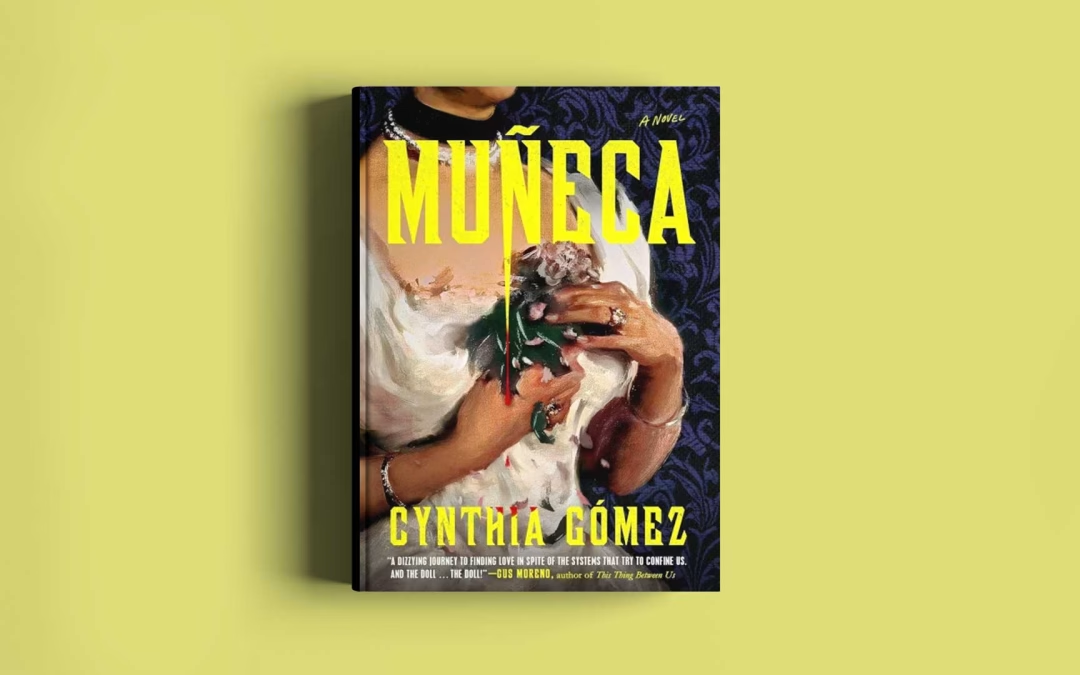
Some books you find years after they came out, dusty on a shelf at a friend's place. Others arrive in the world the same morning you decide to write about them. This one is the second kind. Muñeca, the debut novel by the Oakland writer Cynthia Gómez, publishes today.
That timing matters for what you are about to read. The reviews are not all in yet. The think pieces are not yet written. What is in front of us is the book itself and what its publisher and author have said about it. We will let it speak for itself, which is how it should be on a release day anyway.
This is a Gothic horror novel, the modern queer kind that has been quietly remaking the genre over the last several years. If you have a shelf for Silvia Moreno-Garcia's Mexican Gothic and Carmen Maria Machado's In the Dream House, and for the recent crop of haunted-house novels that have something to say about colonialism and inheritance, Muñeca is squarely in that conversation. The publisher calls it "a vivid, surreal Gothic." That seems right.
It is 1968 in Oakland, California. Natalia Fuentes is a young Latina witch, working class, queer, and very good at what she does. She has been hearing about a woman named Violeta Miramontes, the only child and heiress of an old family descended from Spanish settlers and Mexican rancho owners. Violeta has been left paralyzed by a mysterious illness. The doctors have nothing.
Nati has a theory. Nati thinks the illness is a curse.
She also has a plan. She will work her way into the Miramontes house as Violeta's caretaker, break the spell, and collect a handsome fee for her trouble. Her suspicions about dark magic turn out to be correct almost immediately. What she does not plan on is feeling something for the woman she has come to save. She does not plan on attracting the attention of whoever cast the curse in the first place. Both things happen anyway.
Cynthia Gómez is not new to horror, even if this is her debut novel. She is the author of the story collection The Nightmare Box and Other Stories, and her short fiction has appeared in Fantasy Magazine, Strange Horizons, Pseudopod, and Nightmare Magazine, all of which are serious homes for the horror genre. She is a Tin House and VONA alumna. She lives in Oakland, the city the book takes place in.
The publisher describes Muñeca as "riveting and richly layered." They promise it contains moments that "chill your bones and warm your heart." Whether those promises hold up is for you to find out, and to tell the rest of us.
Gothic horror is best read at the right time of day. This one is set in a big quiet house, with two women alone together for long stretches, in a city where the fog comes in fast at night. Read it at night. Read it slowly. The genre rewards patience. Pay attention to what objects do in the book, especially the doll that gives the book its title. In Spanish, muñeca means doll, and it can also mean a beloved person, a little wrist, a small thing held carefully. The word is doing work before you ever open the cover.