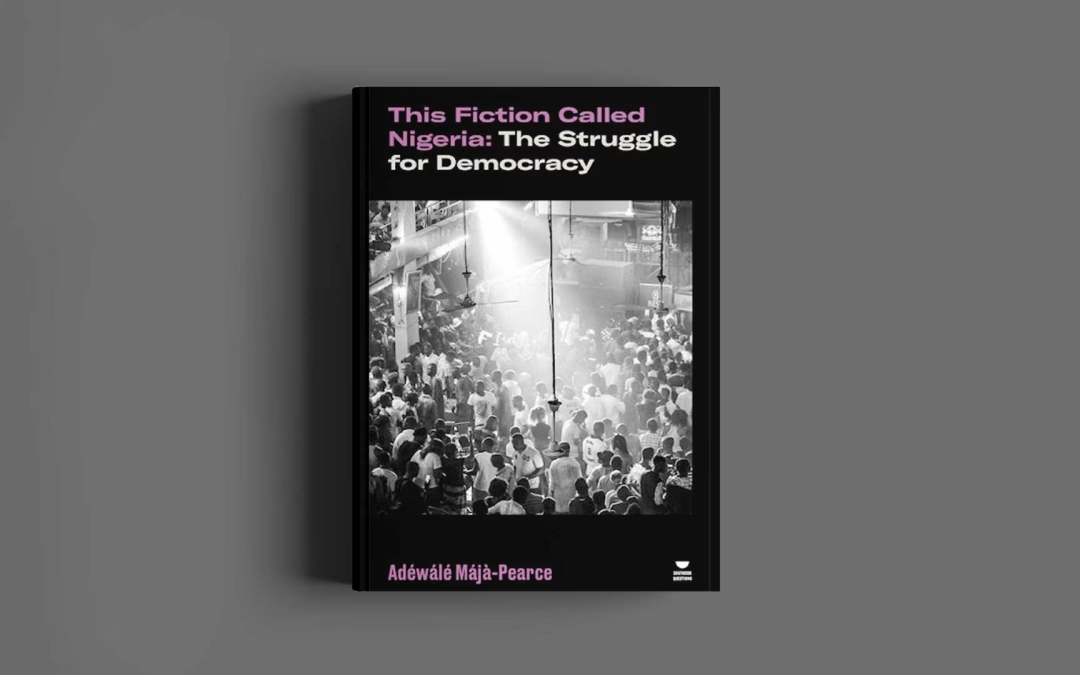
Nigeria is the most populous country in Africa, a place stitched together at the turn of the twentieth century by British colonial administrators who drew a line around several hundred ethnic and religious groups and called the result a country. This Fiction Called Nigeria takes that founding act seriously and traces what has followed: independence in 1960, twenty-five unbroken years of military rule, the uneasy democracy that came after, and the daily reality of life for the more than half of Nigerians who live in extreme poverty. Maja-Pearce is a critic and essayist by trade, and you can feel it. The book is short, sharp, and built sentence by sentence. He has been writing about his country for decades, and this is the book in which he tells you, without flinching, what he has come to think.
About the Author
Adewale Maja-Pearce is one of Nigeria's leading public intellectuals and one of the most consistently interesting essayists working in English about contemporary Africa. He has written two memoirs, In My Father's Country and The House My Father Built, both of which are worth seeking out on their own merits. His shorter work appears regularly in the New York Times, the London Review of Books, and the Times Literary Supplement, where he has been a fixture for years. He writes the way the best essayists do, which is to say with the courage of a particular point of view and the patience to back it up. He is not interested in flattering anyone, including himself. If you have read his criticism before, you know the voice. If you have not, This Fiction Called Nigeria is a strong place to start, and the memoirs are a natural next step.
Why It's Worth Your Time
There are two kinds of books written about countries in crisis. There is the foreign-correspondent book, which arrives, observes for a few months, and leaves with a tidy thesis. And there is the book by someone who has lived there their whole writing life and has nowhere else to put the argument. Maja-Pearce is writing the second kind. He covers an enormous amount of territory in this short book. The colonial origins, sometimes called "the white man's grave" by the British administrators who survived it. The Fulani herdsmen now navigating climate change by seizing grazing land. The estimated thirty thousand bandits who hold up buses and trains in the country's north. The sheer, eye-watering scale of what has been stolen from public coffers by people who already have everything. He also writes about what has begun to push back. The 2020 End SARS protests against police brutality. The recent organizing around sexism and homophobia. The energy, in particular, of Nigerian youth, more than half of the country, who are not willing to inherit things the way they have been. The book does not promise a happy ending. It does suggest, quietly, that if Nigeria has a future worth having, it is in younger hands. For non-Nigerian readers, this is also one of the most efficient ways to understand a country that will shape the twenty-first century whether the rest of the world is paying attention or not. By 2050, Nigeria is projected to be the third-most-populous country on earth. What happens there will matter to everyone.
Before You Start
A few practical things. This is nonfiction, and it is bracing nonfiction. Maja-Pearce does not soften what he is describing, and parts of the book are genuinely hard to sit with. Pace yourself. It is not a long book, but it is dense, and reading it in a single sitting can feel like drinking seawater. A chapter a night with a notebook works better. If this is your introduction to writing about Nigeria, a few companion reads will deepen the experience. Wole Soyinka's You Must Set Forth at Dawn gives you the long view from a Nobel laureate who has lived through every era Maja-Pearce describes. Chimamanda Ngozi Adichie's Half of a Yellow Sun puts the Biafran war into fiction. Teju Cole's Every Day Is for the Thief is a slim, lyrical account of returning to Lagos after years away. Read those alongside this one and you will come out with a real sense of a place rather than a headline. The book is published by Verso, and the paperback is the standard edition. Worth ordering from your independent bookstore if they do not already have it on the shelf. They should.